Best overall for a smaller tractor in 2026: Single Row Automatic Potato Digger PTO. Best for buyers seeking a named Bomet harvester: Bomet Single Row Potato Digger / Harvester. Both dig one row at a time; a two-row potato planter is not a two-row digger.
- Best potato digger rows in 2026: both diggers compared here harvest 1 row per pass.
- Single Row Automatic Potato Digger PTO is the clearest fit for buyers with smaller tractors.
- Bomet Single Row Potato Digger / Harvester suits buyers seeking the Bomet Upus PTO-driven model.
- A Bomet 2 Row Potato Planter plants potatoes; it does not harvest them.
Why this matters
Row count tells you how many rows a machine works in one pass. It does not tell you whether the machine fits your tractor, follows your existing row spacing or handles your soil well. Start with the job: are you planting seed potatoes or lifting a mature crop?
That distinction matters in 2026 because the named products include a two-row planter but only single-row diggers. Treating the planter as a harvesting option produces a comparison that cannot help you buy the right implement. For a closer look at the harvest job, read the guide to potato diggers for small-scale market gardens.
Implements Direct is a New Zealand tractor-implement retailer serving farmers, lifestyle block owners and compact tractor operators. This Implements Direct potato digger comparison ranks the two identified PTO-driven harvesters on the uses their product information supports. It does not assign a two-row harvesting recommendation to a machine identified as a planter.
What makes the best potato digger for your rows
Use these checks before treating a higher row count as an upgrade:
- Job: A digger lifts potatoes at harvest. A planter places seed potatoes in the ground. The same row count on their names does not make them interchangeable.
- Row count: A single-row digger works one row per pass. On a plot with 4 rows, plan for 4 passes along those rows, plus the turns needed to reach each one.
- Tractor match: Check the digger's stated PTO and tractor requirements against your tractor's manual. Do not substitute the tractor's headline engine horsepower for a PTO requirement.
- Row fit: Measure the spacing you planted and check the digger's working dimensions. A machine that does not follow the crop row cleanly is the wrong choice regardless of its place in a ranking.
- Connection: Confirm the implement's mounting, PTO shaft and any other connection requirements before ordering. A product name alone does not establish compatibility with your tractor.
- Harvest method: Ask how the digger lifts the crop and sheds soil, particularly if your ground is cloddy. The supplied product descriptions do not establish a separation-method advantage for either ranked machine.
For the best potato digger rows decision in 2026, choose a verified harvest machine first; then check its fit. Extra rows have no value if the implement does the wrong job or cannot be connected to your tractor.
Potato diggers at a glance
| Rank and item | Rows | Best for | Stated distinction | Key limitation |
|---|---|---|---|---|
| 1. Single Row Automatic Potato Digger PTO | 1 row | Smaller-tractor buyers | Described as a compact, PTO-driven digger for smaller tractors | Does not harvest 2 rows in one pass |
| 2. Bomet Single Row Potato Digger / Harvester | 1 row | Buyers seeking a Bomet Upus harvester | Identified as a PTO-driven Bomet single-row harvester | Tractor fit must be checked against its full specifications |
These are two single-row choices, not a contest between one-row and two-row harvesters. Their order reflects the narrower fit question answered by the available descriptions: the first explicitly identifies smaller tractors as its intended application. The table does not imply that either machine has a verified advantage in digging depth, crop handling or soil separation.
1. Single Row Automatic Potato Digger PTO: best for smaller tractors
The Single Row Automatic Potato Digger PTO is described as a compact, PTO-driven potato digger designed for smaller tractors. It works one row at a time. That makes it the clearest documented match in this comparison when you are shopping around a smaller tractor rather than starting with a particular manufacturer's name.
Single Row Automatic Potato Digger PTO pros:
- Its description expressly identifies smaller tractors as the intended application.
- Its single-row layout gives you a direct match when your harvest plan is one row per pass.
- PTO drive is identified, so you know to check the tractor's PTO specifications before purchase.
Single Row Automatic Potato Digger PTO cons:
- It cannot clear 2 rows in a single pass.
- The product name and supplied description do not confirm your tractor's PTO output, hitch fit or the spacing of your planted rows; those checks remain yours.
- Automatic in the title is not a substitute for a description of how the crop is lifted and separated.
Best for: a grower with a smaller tractor who wants a documented compact, single-row PTO digger. Verdict: Buy after confirming tractor and row fit. Implements Direct's Single Row Automatic Potato Digger PTO is the best fit in this comparison for buyers with smaller tractors.
2. Bomet Single Row Potato Digger / Harvester: best for Bomet buyers
The Bomet Single Row Potato Digger / Harvester is identified as the PTO-driven Bomet Upus single-row model. It is a harvesting implement, not the Bomet planter also named in the product information. Choose this listing when you specifically want to assess the Bomet Upus against your tractor and planting layout.
Bomet Single Row Potato Digger / Harvester pros:
- The Bomet name and Upus model are identified, giving you a specific machine to research against your tractor.
- The listing identifies both its PTO drive and its single-row harvesting job.
- It gives Bomet equipment buyers a clearly named harvesting option to distinguish from Bomet's potato planters.
Bomet Single Row Potato Digger / Harvester cons:
- It still works 1 row at a time, so it does not answer a requirement to harvest 2 rows per pass.
- Its supplied description does not establish a performance advantage over the other ranked digger.
- Check its full tractor, hitch and row-fit requirements rather than assuming it shares specifications with a Bomet planter.
Best for: a buyer specifically assessing the Bomet Upus single-row PTO harvester. Verdict: Hold until its full fit specifications match your tractor. The brand and model identify what to check; they do not establish a better harvest result on their own.
Why the two-row Bomet machine is not ranked as a digger
The Bomet 2 Row Potato Planter has a clear row-count distinction: it is named as a two-row machine. Its job is planting. The Bomet Single Row Potato Planter is likewise a planting machine, despite sharing a one-row format with both harvesters above. Neither belongs in a potato digger ranking.
If you plant 2 rows per pass and harvest with a single-row digger, the planting and harvesting pass counts differ. That is not evidence that you need a two-row harvester. You still need to assess the tractor available at harvest, the planted row spacing and the digger's fit. A machine bought for planting cannot take the place of a harvesting implement.
Planting versus harvesting: check the task first
Potato planter: Use this category when you need to place seed potatoes in prepared rows. A product identified as a planter does not provide a verified harvest function simply because its title includes a row count.
Potato digger: Use this category when mature potatoes need lifting. Both ranked machines are identified as single-row, PTO-driven harvesters. The decision between them rests on their stated application and your tractor fit, not on an imaginary two-row advantage.
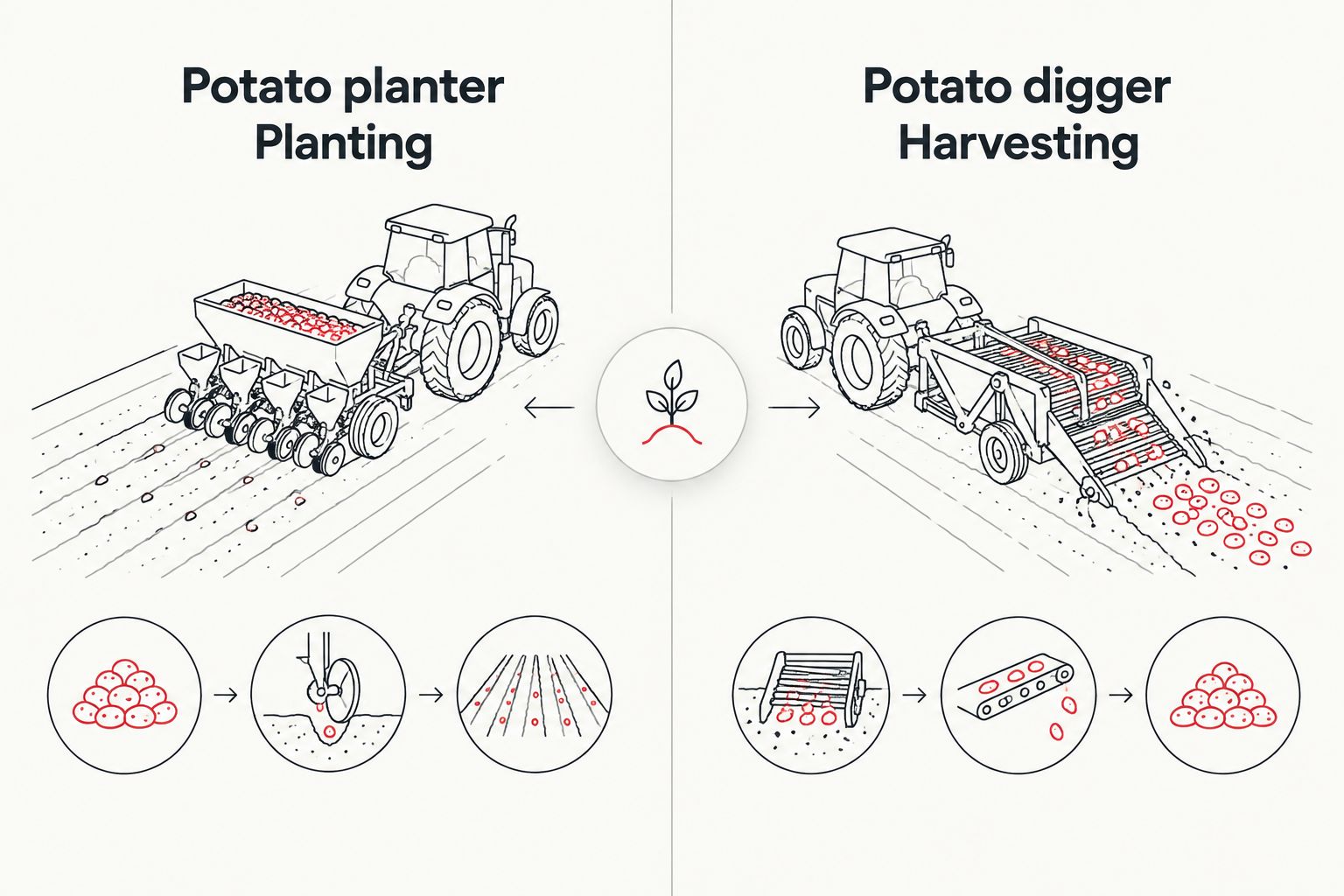
A useful question for 2026 is not simply how many rows the implement names. Ask what operation it performs on each pass. Then compare that answer with the work still to be done in your paddock or garden.
Check fit before choosing either digger
Start with your tractor's manual and the full specifications for the digger you are considering. Check PTO requirements, mounting details and any stated tractor limits. Do not assume that compact in a description means every compact tractor will run the machine; compact describes an intended use, not a universal connection.
Next, measure your planted rows. Record their spacing and consider whether there is room to enter, follow and leave each row without driving over the crop. A single-row digger needs to work along the row you grew, not the row layout you wish you had chosen. If the planting is irregular, check alignment before committing to the full harvest.
Finally, establish what happens after the potatoes are lifted. You need a plan for collecting the crop and dealing with soil left on it. Do not assume either ranked machine includes a particular cleaning or collection mechanism: confirm those details from the full product specifications. This is especially important if your buying decision depends on how much hand collection remains after a pass.
For a 4-row plot, the row-count calculation is straightforward: a single-row digger needs a pass along each of the 4 rows. That calculation says nothing about travel speed, crop condition or finished harvest time. Use it to plan the route, not to predict output from either model.


How these diggers were ranked
This 2026 ranking uses the stated product type, row count, drive and intended application. Both ranked products are potato diggers, both work 1 row and both are described as PTO-driven. The Single Row Automatic Potato Digger PTO takes the first position for smaller-tractor buyers because its description explicitly identifies that application. The Bomet Upus takes the named-model slot without an unsupported claim that it digs more rows or separates soil better.
There is no verified two-row digger among the named products. A fair ranking stops there rather than turning a two-row planter into a harvester. Likewise, the comparison cannot settle which machine fits your exact tractor without its full specifications. Treat row count as the first filter and verified fit as the final decision.
Which potato digger should you choose in 2026?
Choose the Single Row Automatic Potato Digger PTO if your starting point is a smaller tractor and you need one-row PTO harvesting. Its description gives that application the clearest support. Assess the Bomet Single Row Potato Digger / Harvester if you want the Bomet Upus specifically and can confirm its fit before ordering.
Do not buy a two-row planter to solve a harvesting job. Implements Direct's potato digger options identified here are both single-row machines. If harvesting 2 rows in one pass is a firm requirement, neither ranked digger meets it; find a verified two-row harvester and check its specifications separately.
FAQ
What's the best potato digger for a smaller tractor in 2026?
The Single Row Automatic Potato Digger PTO is the clearest documented choice here for a smaller tractor. It is described as a compact, PTO-driven single-row digger, but you still need to confirm your tractor's specifications against the machine.
Does Implements Direct have a two-row potato digger in this comparison?
No two-row potato digger is identified in this comparison. The named Bomet two-row machine is a potato planter, which places seed potatoes rather than harvesting mature ones.
Is a two-row potato planter the same as a two-row potato digger?
No. A two-row planter plants seed potatoes, while a potato digger lifts the mature crop at harvest. Row count does not make the two implements interchangeable.
What does single-row mean on a potato digger?
Single-row means the digger works one potato row per pass. For a plot with 4 rows, that means a pass along each of the 4 rows, excluding the turns between them.
Which is better: the Bomet Upus or the Single Row Automatic Potato Digger PTO?
The Single Row Automatic Potato Digger PTO has the clearer stated application for smaller tractors; the Bomet Upus is the named Bomet option. Neither product description establishes a digging-performance advantage, so confirm fit before choosing.
Can I choose a potato digger by row count alone?
No. Row count tells you how many rows it works per pass, but you must also check PTO requirements, mounting and planted row spacing against your tractor and crop.
How do I know whether a potato digger fits my planted rows?
Measure your planted row spacing and compare it with the digger's full working specifications. Check that your tractor can follow each row without driving over the crop.
One last thing
Keep the row count on your planting plan beside the row spacing. The count tells you how many harvesting passes a single-row digger needs; the spacing helps you check whether the digger can follow those rows. They answer different questions, and you need both before choosing equipment in 2026. Implements Direct lists two single-row PTO harvesters here, not a verified multi-row substitute.