Best overall seeder hopper capacity: 12V Fertiliser Spreader 180L. Best for large-scale pasture oversowing: PTO Spreader 340L. Best for small blocks and precision work: 12V Fertiliser Spreader 70L.
- Best seeder hopper capacity for most NZ blocks in 2026: the 12V Fertiliser Spreader 180L balances litres and refills.
- PTO Spreader 340L holds the largest hopper in this lineup at 340 litres, built for large-scale pasture oversowing.
- 12V Fertiliser Spreader 70L is the smallest hopper at 70 litres, best for small blocks and precision top-dressing.
- Stone Burier with Seeder 1.65m and the Rotex M150 power harrow add one-pass seedbed prep and seeding.
Why this matters
Hopper capacity decides how many times you stop to refill mid-paddock, and that number changes the whole job in 2026 whether you're oversowing ryegrass on a 40-hectare block or top-dressing a two-hectare lifestyle property. A seeder with a 70 litre hopper on a 20-hectare paddock means constant stops; a 340 litre unit on a half-hectare lawn is capacity that never gets used. Implements Direct stocks seeders and combination seeding attachments across that whole range, and matching hopper size to paddock area is the single biggest factor in whether the job takes one afternoon or three. The broadcast seeders for pasture oversowing guide covers timing and application rates; this page ranks the hardware by hopper capacity so you can pick the right size before you buy.
What makes the best seeder hopper capacity
- Hopper or seed box size relative to paddock area — match litres to hectares, not the other way round
- Drive type — PTO-driven units handle heavier, steadier loads; 12V electric units mount on tractors without a working PTO shaft
- Working width matched to tractor horsepower — a 1.65m unit on a 20HP tractor stalls; a 1.25m unit on a 45HP tractor wastes capacity
- Metering and speed control — even spread depends on flow rate tracking ground speed, not hopper size alone
- Application match — broadcast oversowing and one-pass seedbed cultivation are different jobs suited to different seeders
Seeders ranked by hopper capacity: at a glance
| Seeder | Best for | Hopper capacity | Working width | Key limitation |
|---|---|---|---|---|
| 12V Fertiliser Spreader 180L | General pasture and paddock oversowing | 180L | Broadcast, no set width | Runs off 12V, no PTO option |
| PTO Spreader 340L | Large-scale pasture oversowing | 340L | Broadcast, no set width | Needs a working PTO shaft |
| 12V Fertiliser Spreader 70L | Small blocks and precision top-dressing | 70L | Broadcast, no set width | Frequent refills over a few hectares |
| Stone Burier with Seeder 1.65m | One-pass seedbed prep on stony ground | Not published | 1.65m | Seed box size isn't listed on the spec sheet |
| Rotex M150 Power Harrow with Grass Seeder and Roller | Fine turf and lawn seedbed establishment | Not published | 1.5m | Seed box size isn't listed; needs 15-45HP tractor |
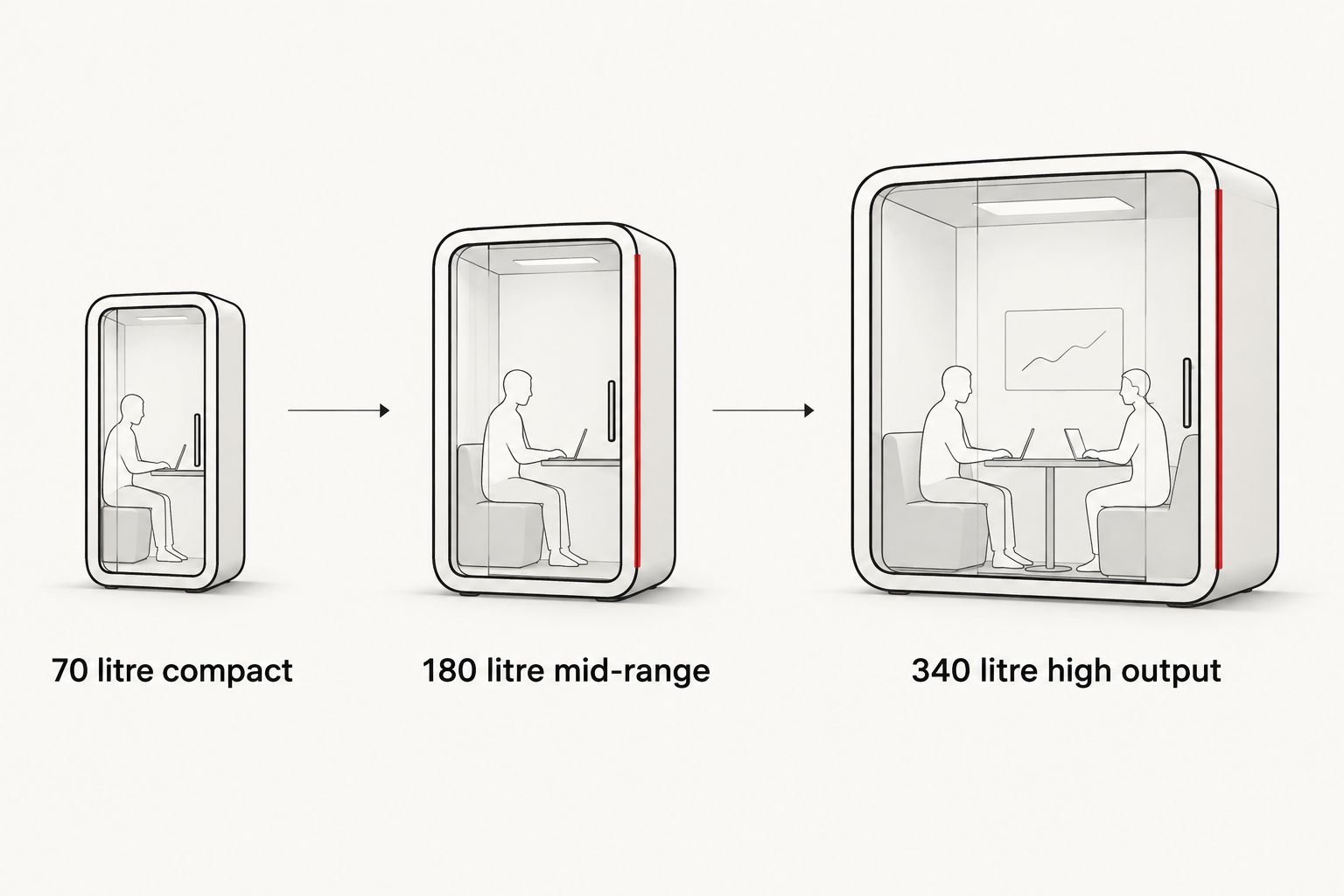
Capacity in this lineup splits into three clean tiers: 70 litres for small blocks, 180 litres for general paddock work, and 340 litres for anything approaching broadacre oversowing. The two seeding-integrated tillage tools don't publish a seed box figure, so their working width and tractor HP range carry more weight in the decision.
1. 12V Fertiliser Spreader 180L: best seeder hopper capacity for general pasture oversowing
The 12V Fertiliser Spreader 180L (model IE180SC) carries a 180 litre hopper and runs off a 12V electric drive with a speed controller, so application rate tracks ground speed without wiring into the tractor's PTO. It handles fertiliser and grass seed on the same chassis, which is why it sits at the top of Implements Direct's seeder range for general-purpose oversowing.
12V Fertiliser Spreader 180L pros:
- 180 litre hopper covers more ground per fill than the 70L unit
- 12V electric drive works on any tractor with a spare electrical outlet, no PTO shaft required
- Speed controller keeps output steady as ground speed changes
12V Fertiliser Spreader 180L cons:
- Electric drive tops out below what the PTO-driven 340L unit can push through in a day
- Still needs a refill stop on anything past a few hours of continuous oversowing
Best for: general pasture and paddock oversowing on lifestyle blocks and small sheep and beef units. Verdict: Buy.
2. PTO Spreader 340L: best seeder hopper capacity for large-scale oversowing
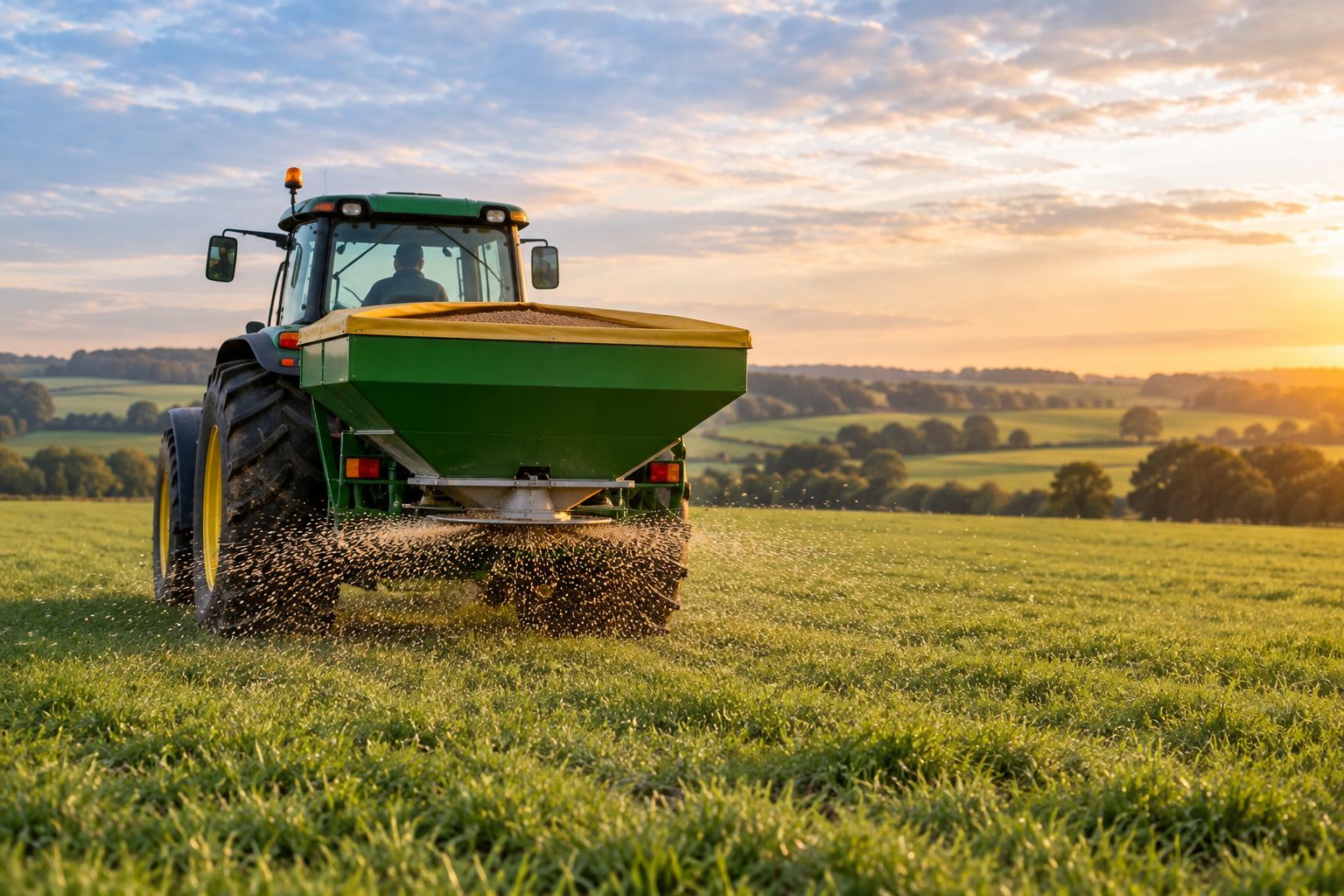
The PTO Spreader 340L carries the largest hopper in this lineup at 340 litres and draws drive straight from the tractor's power take-off instead of a 12V motor. That's 160 litres more than the 180L spreader, which means fewer stops across bigger blocks, and PTO drive holds a steadier output under load than an electric motor manages.
PTO Spreader 340L pros:
- 340 litre hopper roughly halves refill stops compared with the 180L unit on the same paddock
- PTO drive delivers steadier output under load than a 12V motor
- Handles fertiliser and seed broadcasting on the same frame
PTO Spreader 340L cons:
- Needs a working PTO shaft — it's off the table for tractors without one
- No 12V option, so it can't run off battery power alone
Best for: large-scale pasture oversowing where paddock area outstrips a 180L or 70L hopper. Verdict: Buy — provided the tractor has a live PTO.
3. 12V Fertiliser Spreader 70L: best seeder hopper capacity for small blocks
The 12V Fertiliser Spreader 70L with Speed Flow Remote Controller is the smallest hopper in the range at 70 litres, sized for lifestyle blocks and compact tractors where a 180L or 340L unit is more capacity than the job needs. The remote controller adjusts flow rate from the tractor seat instead of stopping to reset a lever manually.
12V Fertiliser Spreader 70L pros:
- Smallest, lightest hopper in the lineup, easy on a sub-compact tractor's lift capacity
- Remote flow control from the seat speeds up top-dressing small paddocks
- 12V drive skips the need for a live PTO shaft
12V Fertiliser Spreader 70L cons:
- 70 litres means frequent refill stops on anything past a couple of hectares
- Not sized for full-scale pasture oversowing
Best for: small blocks and precision top-dressing where refill stops aren't a bottleneck. Verdict: Buy for small-block work, Skip for broadacre oversowing.
4. Stone Burier with Seeder 1.65m: best for one-pass seedbed prep on stony ground
The Sierra HSB165S Stone Burier with Seeder combines reverse-rotation soil preparation with an integrated seed box in one 1.65m pass, so stones get buried and seed goes down in the same trip. It's built for turf and pasture establishment on ground with enough stone content to wreck a standalone seed drill.
Stone Burier with Seeder 1.65m pros:
- Buries stones and lays seed in a single pass, cutting trips across the block
- 1.65m working width covers ground faster than the 1.25m version
- Suits stony sites where a standalone broadcast spreader can't prep the seedbed first
Stone Burier with Seeder 1.65m cons:
- Seed box capacity isn't published on the spec sheet, so budget refill frequency on the conservative side
- Reverse-rotation soil prep runs slower per hectare than straight broadcasting
Best for: one-pass seedbed preparation and seeding on stony paddocks. Verdict: Buy for stony sites, Hold for clean ground — a broadcast spreader is faster there.
5. Rotex M150 Power Harrow with Grass Seeder and Roller: best for fine turf establishment
The Del Morino Rotex M150 Power Harrow with Grass Seeder and Roller pairs a 1.5m gear-driven power harrow with an integrated grass seeder and roller, built for tractors in the 15-45 HP range. It's the finest-finish option in this lineup, aimed at lawn and fine turf seedbeds rather than rough pasture.
Rotex M150 pros:
- Gear-driven rotors run in an oil bath, built for repeated fine-tilth passes
- Integrated roller firms the seedbed straight after seeding, in the same pass
- 1.5m working width suits compact tractors without overloading a 15-45 HP unit
Rotex M150 cons:
- Seed box capacity isn't published, so it isn't sized for broadacre oversowing
- Power harrow tillage runs slower per hectare than straight broadcast seeding
Best for: fine turf and lawn seedbed establishment on compact tractors. Verdict: Buy for turf work, Skip for pasture oversowing.


How we ranked these seeders
Hopper or seed box capacity came first — litres per fill, checked against the working width and drive type each unit actually needs. Drive type came second: PTO versus 12V changes which tractors a seeder fits, regardless of hopper size. Working width and horsepower range came third, and application match — broadcast versus one-pass seedbed cultivation — decided the final "best for" label on each item. Two units in this lineup don't publish a seed box figure; they're ranked on working width and tractor HP range instead, and that limitation is called out plainly rather than filled in with a guess.
Which seeder should you choose in 2026?
For most Implements Direct customers running a lifestyle block or a small sheep and beef unit, the 12V Fertiliser Spreader 180L is the default pick — enough hopper capacity to cover a working day without excessive refills, and no PTO dependency. Step up to the PTO Spreader 340L once paddock area pushes past what a 180L hopper can cover in a session, or when the tractor has a PTO shaft doing nothing else. Drop down to the 12V Fertiliser Spreader 70L for anything under a few hectares where a bigger hopper never gets used. If the ground has stone content or needs a fine turf finish, the seeder decision stops being about litres and starts being about the Stone Burier with Seeder 1.65m or the Rotex M150 Power Harrow with Grass Seeder and Roller instead.
FAQ
What's the best seeder hopper capacity for a lifestyle block in 2026?
For most lifestyle blocks in 2026, a 180 litre hopper like the 12V Fertiliser Spreader 180L balances refill frequency against weight on the tractor. Blocks under a couple of hectares are better served by the 70 litre 12V Fertiliser Spreader 70L, since a bigger hopper rarely gets used to capacity.
Is a bigger seeder hopper always better?
No — a bigger hopper adds weight and cost without benefit if the paddock area doesn't need it. Match litres to hectares first, then check the tractor can lift and drive the unit.
What's the difference between a 12V spreader and a PTO spreader?
A 12V spreader runs its spinner off an electric motor and mounts on any tractor with a spare electrical outlet, no PTO shaft needed. A PTO spreader draws drive from the tractor's power take-off, which handles heavier loads more steadily but requires a working PTO shaft.
Can a fertiliser spreader also sow grass seed?
Yes — the 12V Fertiliser Spreader 70L, 12V Fertiliser Spreader 180L and PTO Spreader 340L all broadcast fertiliser and grass seed from the same hopper, which is standard practice for pasture oversowing in New Zealand.
How do I know if my tractor can run a 340 litre PTO spreader?
Check the tractor has a working, correctly speed-rated PTO shaft and enough lift capacity for a full 340 litre hopper of seed or fertiliser. If the tractor has no PTO, the 12V Fertiliser Spreader 180L or 70L is the workaround.
What working width do I need for a stone burier with seeder?
Match working width to tractor horsepower — the 1.25m Stone Burier with Seeder suits Category 1 tractors around 28-45 HP, and the 1.65m version covers more ground per pass on tractors sized to handle the wider unit.
Is the Rotex M150 power harrow seeder good for lawns?
Yes — the Rotex M150 Power Harrow with Grass Seeder and Roller is built for fine turf and lawn seedbeds, with gear-driven rotors and an integrated roller for a finished result rather than rough pasture prep.
Does hopper capacity affect price?
Larger hoppers and PTO drive generally cost more than smaller 12V units, but exact figures depend on the model — check current listings on Implements Direct for pricing.
One last thing
A 12V spreader's speed controller only regulates flow rate — it does nothing to correct for ground speed itself, so driving too fast still thins the spread no matter how big the hopper is. Watch the tractor's speed, not just the hopper gauge, and the capacity numbers above will hold up in the paddock the way they do on the spec sheet.